
British paras in Helmand
Filed under Uncategorized
New drones are sneaking past jammers on Ukraine’s front lines
New drones are sneaking past jammers on Ukraine’s front lines https://www.economist.com/europe/2025/05/05/new-drones-are-sneaking-past-jammers-on-ukraines-front-lines From The Economist
Filed under Uncategorized
British Troops Readied for Show of Force
The Times has reported that next month the UK will to deploy 20,000 military personnel across eastern Europe as part of the NATO exercise Steadfast Defender. They will be accompanied by one of the Royal Navy’s two aircraft carriers, eight other warships and F35 fighter jets.
The article quotes Grant Shapps, the UK Defence Secretary, as warning that the world had moved to a ‘prewar’ phase as global conflicts escalated. He urged NATO allies to increase their defence spending to meet the alliance’s target of 2 per cent of gross domestic product in what h says is ‘far more dangerous world.’
Shapps argues that the war in the Ukraine and conflicts in the Middle East have the foundations of world order have been shaken ‘to their core.’ He states that the ‘peace dividend’ enjoyed by the west since the end of the Cold War is now over and ‘the foundations of the world order are being shaken to their core.’
Britain is also part of the Joint Expeditionary Force along with the three Baltic countries [Estonia, Latvia and Lithuania], the five Nordic ones [Denmark, Finland, Iceland, Norway and Sweden] and the Netherlands. According to a Times column by Edward Lucas, these 10 countries have a combined GDP and defence budget greater than Russia.
However, they lack plans, stocks of munitions and a clear political decision making process. Also, Poland, the strongest military power in the region is absent.
Filed under Current affairs
BBC News: UK to deploy Royal Navy ships to support Israel
BBC News – UK to deploy Royal Navy ships to support Israel https://www.bbc.co.uk/news/uk-67095846
Filed under Uncategorized
BBC: Rogue Russian pilot tried to shoot down RAF aircraft in 2022
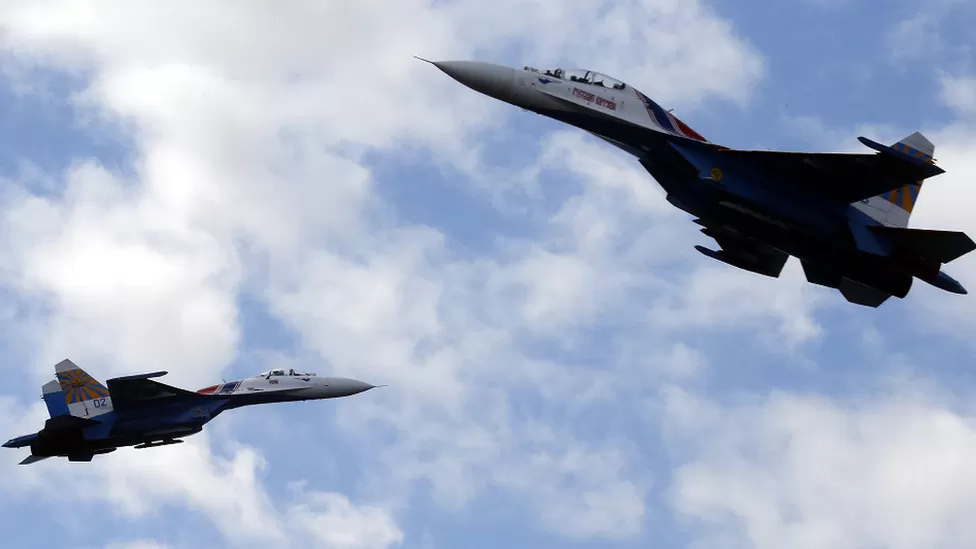
“ A Russian pilot tried to shoot down an RAF surveillance plane after believing he had permission to fire, the BBC has learned. The pilot fired two missiles, the first of which missed rather than malfunctioned as claimed at the time. Russia had claimed the incident last September was caused by a “technical malfunction”. The […]
BBC: Rogue Russian pilot tried to shoot down RAF aircraft in 2022
Filed under Uncategorized
Aid to Ukraine: Storm Shadow Missiles

Subscribe to continue reading
Subscribe to get access to the rest of this post and other subscriber-only content.
Comments Off on Aid to Ukraine: Storm Shadow Missiles
Filed under Current affairs
It’s Like the First World War…If We kill them, they’re just replaced
The war between Russian and Ukraine features hi-tech weaponry such as missiles, aircraft, tanks and drones but for many front line infantrymen, iconditions are similar to those of the the First World War
Click on the link below for an article from the London Sunday Times about front line conditions in the war between Ukraine and Russia.
It quotes Metar, a 54 year old Ukrainian videographer who is now a drone operator, as saying that ‘It’s just like the First World War.’ Metar and his comrades are in trenches that are sometimes only 150m from the Russians. They attack in waves across muddy ground after a preliminary artillery bombardment, trying to get close enough to throw grenades into the Ukrainian trenches.
They are poorly equipped and the worst trained are sent in first, apparently to reveal the Ukrainian positions and to use up Ukrainian ammunition. Wounded Russians are abandoned in No Man’s Land.
Unlike a First World War soldier, Metar has a bird’s eye view of the Russian attacks thanks to the drones
The Ukrainians suffered from frost bite in the early days of the fight, but have now learnt to avoid it by keeping moving. They do two days in the trenches and then two days off.
Many of the Russians come from the Wagner Group, a force of 50,000 men, 40,000 of them convicts from Russian prisons. It was founded by Yevgeny Prigozhin, a billionaire who is close to President Vladimir Putin
Filed under Uncategorized
Arms for Ukraine
The UK has recently announced that it will supply Ukraine with large quantities of munitions, including 600 Brimstone anti tank missiles and 14 Challenger Main Battle Tanks. The British Army had intended to upgrade 148 of its 227 Challenger 2 tanks to Challenger 3 standard. However, Ben Wallace, the Secretary of State for Defence was quoted in The Times on 17 January 2023 as saying that he would be ‘reviewing the number of Challenger 3 conversions to consider whether the lessons of Ukraine suggest that we need a larger tank fleet.’
The same newspaper also reported that the UK is suppling Ukraine with 30 AS-90 self propelled guns, hundreds more armoured vehicles including Bulldogs and 100,000 artillery shells, Wallace admits that this shipment will ‘not change the course of history’ but hope that it will encourage Germany to permit other NATO countries to send Leopard tanks to Ukraine.
Germany has been reluctant to supply tanks to Ukraine. A dozen other NATO countries own about 2,000 Leopards between them. Several, including Finland and Poland are willing to send a total of 90 of their German Leopard tanks to Ukraine but this requires the permission of Germany as the original supplier. This has not been forthcoming until now, but the BBC is now reporting that Germany will not block exports of Leopards to Ukraine.
The USA has not supplied Ukraine with MI Abrams tanks, which it describes as ‘unsuitable’ [The Times 21 January 2023, p. 6] for Ukrainian conditions but it has sent it $23bn worth of missiles, howitzers, ammunition, drones, armoured vehicles, mines, body armour, coastal boats and communications equipment. See this link to The Hill for the full list.
According to NBC News, Secretary of Defense Lloyd Austin and Chairman of the Joint Chiefs General Mark Milley think that it will take too long to train Ukrainian crews to operate Abrams, which are also difficult to maintain.
Graphics on the website of the Kiel Institute for the World Economy show that, as of 20 November 2022, the six biggest donors in absolute terms were the USA, UK, EU, Germany. Canada and Poland but that the six biggest relative to GDP were neighbours of Ukraine: Poland, Latvia, Lithuania, Czech Republic and Slovakia,
EDIT German Chancellor Olaf Scholz announced on 25 January 2021 that Germany would allow other countries to send Leopards to Ukraine and would send 14 of its Leopards to Ukraine.
https://www.bbc.co.uk/news/live/world-europe-64396659
EDIT 2 Later on 25 January, the USA announced that it would give 31 M1 Abrams tanks to Ukraine.
Filed under Current affairs
The Russo-Ukraine war: Implications for UK Defence
Excellent analysis of the implications of the Russo-Ukraine War for British defence policy by Geraint Hughes of the Defence Studies Department, King’s College London.

Geraint Hughes, Defence Studies Department, King’s College London
Over a month has passed since Vladimir Putin launched his ‘special military operation’ to subjugate Ukraine. Russia’s blatant and unprovoked invasion of its neighbour has caused amajor international crisis, with Britain and other NATO powers being presented with the hard task of helping the Ukrainians to defend their homeland while simultaneously avoiding escalation with its nuclear-armed aggressor. The aim of this post is to summarise the key implications of this war for Britain’s defence policy, and also for its armed forces in particular.
The 2021Integrated Reviewand the ensuingDefence White Paperemphasised the ‘sub-threshold’ threat that Russia and other potential adversaries posed to the UK and its allies, arguing that Britain’s enemies would utilise tools of statecraft short of overt warfare (propaganda, military sabre-rattling, covert action etc) to achieve their objectives. This thinking reflected current conceptions of‘political…
View original post 1,166 more words
Filed under Current affairs
Hypersonic Missiles
DEFENCE IQ
Dr James Bosbotinis, a UK-based specialist in defence and international affairs, has provided some technical and political insights into hypersonics, and the implications for future defence alliances.
What is a Hypersonic Missile?
A hypersonic missile travels at speeds of Mach 5 and higher – five times faster than the speed of sound (3836 mph), which is around 1 mile per second. Some missiles, such as Russia’s Kh-47M2 Kinzhal air-launched ballistic missile, are allegedly capable of reaching Mach 10 speeds (7672 mph) and distances up to 1200 miles.
RELATED: Lockheed Martin hints at hypersonic aircraft and 6th-gen capabilities
In comparison, the US Tomahawk cruise missile – the U.S. Navy and Royal Navy’s go-to long range missile-system – is subsonic, travelling around 550 mph and travelling a maximum distance around 1500 miles.
Hypersonic missiles come in two variants:
- Hypersonic cruise missiles
This type of missile reaches its target with the help of a high-speed jet engine that allows it to travel at extreme speeds, in excess of Mach-5. It is non-ballistic – the opposite of traditional Intercontinental Ballistic Missiles (ICBM) which utilises gravitational forces to reach its target. - Hypersonic glide vehicles
This type of hypersonic missile utilises re-entry vehicles. Initially, the missile is launched into space on an arching trajectory, where the warheads are released and fall towards the atmosphere at hypersonic speeds. Rather than leaving the payload at the mercy of gravitational forces – as is the case for traditional ICBMs – the warheads are attached to a glide vehicle which re-enters the atmosphere, and through its aerodynamic shape it can ride the shockwaves generated by its own lift as it breaches the speed of sound, giving it enough speed to overcome existing missile defence systems. The glide vehicle surfs on the atmosphere between 40-100km in altitude and reaches its destination by leveraging aerodynamic forces.
“Hypersonic missiles offer a number of advantages over subsonic and supersonic weapons, particularly with regard to the prosecution of time-critical targets (for example, mobile ballistic missile launchers), where the additional speed of a hypersonic weapon is valuable,” Bosbotinis argues.
“It can also overcome the defences of heavily-defended targets (such as an aircraft carrier).
“The development and deployment of hypersonic weapon systems will provide states with significantly enhanced strike capabilities and potentially, the means to coerce. This will be the case where a major regional power, such as Russia, may seek to coerce a neighbour, leveraging the threat of hypersonic strikes against critical targets. As such, the proliferation of hypersonic capabilities to regional states could also be destabilising, upsetting local balances of power. However, it could also strengthen deterrence”.
“In this regard, consider the implications of Iran deploying hypersonic weapons versus an Israeli deployment. Hypersonic weapons may also be problematic in terms of escalation control in the context of a NATO-Russia or US-China confrontation. This concerns dual-capable systems, that is, systems with both conventional and nuclear capabilities, for example, the Kinzhal.”
Bosbotinis also explains that dual-capable systems raise the issue of discrimination: how does one know if the incoming threat is conventional or nuclear? In the context of hypersonic threats, this is compounded by the reduced time available to decision-makers to respond to an incoming threat.
Moreover, the development of submarine-launched hypersonic missiles would raise the potential threat – real or perceived – of attempted decapitation strikes, utilising the combination of the inherent stealth of a nuclear-powered submarine and the speed of a hypersonic missile.
https://edition.cnn.com/2022/04/04/politics/us-hypersonic-missile-test/index.html
The US successfully tested a hypersonic missile in mid-March but kept it quiet for two weeks to avoid escalating tensions with Russia as President Joe Biden was about to travel to Europe, according to a defense official familiar with the matter.
The Hypersonic Air-breathing Weapon Concept (HAWC) was launched from a B-52 bomber off the west coast, the official said, in the first successful test of the Lockheed Martin version of the system. A booster engine accelerated the missile to high speed, at which point the air-breathing scramjet engine ignited and propelled the missile at hypersonic speeds of Mach 5 and above.

US, UK and Australia to develop hypersonic missiles
·Producer
Tue, April 5, 2022, 7:53 PM·5 min read
On April 5, it was revealed that President Joe Biden is preparing to announce that the United States, United Kingdom and Australia have created a security pact in response to China’s military expansion. The three nations are due to co-operate on the creation and development of hypersonic weapons in the so-called Aukus security pact, the Financial Times reported. One of the people familiar with the pact told the FT that an announcement could be made as early as Tuesday.
The push to co-develop the weapons is intended to counter the rise of China’s growing military presence. The Pentagon, the FT writes, has stepped up its efforts in developing hypersonic missiles after discovering how advanced China had become in evolving its weapons. The communist country has carried out several hundred hypersonic missile tests – a stark contrast to the U.S. which has only completed less than a dozen.
China is not the only U.S. adversary with access to the powerful new weapons. Russia’s military has claimed to have twice unleashed hypersonic missiles in its invasion of Ukraine, apparently destroying an arms depot in the process, during its monthlong onslaught.
The missile, designed to be launched from a MiG fighter jet, can fly at 10 times the speed of sound, and unlike other missiles can change course during its flight, making it impossible for air-defense systems to shoot it down. It can also be used to deliver nuclear weapons.
On March 19, the Russian Ministry of Defense claimed it had struck an underground missile and ammunition warehouse in a village that borders Romania, and the following day, it had destroyed a fuel depot near the southern city of Mykolaiv.
Defense Ministry spokesperson Igor Konashenkov said the attack used its newest Kinzhal, or “dagger,” hypersonic missile, in Ukraine.
https://www.ft.com/content/b8ddf153-b9ca-4db5-8835-cb8509a9921f
Filed under Uncategorized


 War and Security